

About CPIJ
Presidential Inaugural Address
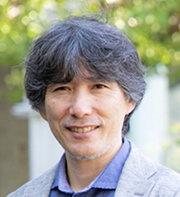 Hideki Koizumi Ph.D
40th President of the City Planning Institute of Japan
Professor, The University of Tokyo
My name is Hideki Koizumi, and I have recently assumed position as the 40th President of the City Planning Institute of Japan (CPIJ).
First and foremost, I would like to express my deepest respect and gratitude toward all former presidents, board and committee members, secretariat staffs, and all members who have dedicated themselves to the development of this Institute. Although my abilities are modest, I am fully committed to doing everything in my power to foster and further the development of our Institute, and to advance city planning; not only in Japan, but also across Asia and throughout the world. I am looking forward to working closely with all of you from now on.
To date, this Institute has played a major role in the development of city planning in Japan and other Asian nations by promoting academic research related to urban planning, returning research's obtained results to practical applications, and leading international exchange within Asia. I believe our mission is to inherit this rich history and tradition while responding to the demands of a new era.
The Social Context Surrounding Cities and City Planning
The cities and regions we see today are undergoing a major transitional period. The challenges we must address are wide-ranging and increasingly complex: addressing the further progression of population decline coupled with a declining fertility rate and an aging society; responding to intensifying natural disasters (disaster prevention and mitigation); addressing climate change and ensuring biodiversity; ensuring social inclusion for diverse groups of people in cities facing widening globalization gaps; and advancing the social implementation of smart cities that utilize digital technology.
Furthermore, and now more than ever, as people's lifestyles diversify there is an increased emphasis on how to enhance "well-being"--which is defined as the mental, physical, and social happiness that people living in cities and wider regions feel--rather than simply and merely creating a better built environment.
Reflecting on history, city planning itself emerged as a social measure to plan, shape, and control cities under democratic social systems amidst various social transformations.
Planning is meant to adapt and evolve with democratic change - and we are entering a period of major social transformation as mentioned above unlike anything seen since the formative era of modern urban planning. Within this context, I believe that urban planning itself must also fundamentally undergo a significant transformation into something new.
Therefore, in order to succeed in this transformation, I believe that cities will be required to serve as "solutions" that integrally resolve various issues for themselves. Furthermore, it will also be essential for us to envision and construct an entirely new planning system as a measure to realize the implementation of such cities.
Under this context, I believe that this Institute must take the lead in examining what the cities and city planning of the next generation should look like by contributing a strong sense of leadership directed towards their successful formation and development.
As we mark the milestone of the 40th presidency and the 75th anniversary of the Institute's founding, and standing upon an awareness of the challenges that lie ahead, I intend to promote our Institute's activities during my term as the president by focusing on the following three pillars:
1. Promotion of Interdisciplinary and Cross-Sectoral Collaboration
As mentioned earlier, increasingly complex urban challenges cannot be solved within the traditional framework of city planning alone. While further collaboration with architecture, civil engineering, and landscape architecture is essential, we also need to build interdisciplinary initiatives with diverse fields such as environmental science, informatics, sociology, economics, and medicine. Furthermore, cooperation with experts and practitioners in fields such as welfare, education, and nursing is indispensable. I hope to deepen exchanges with researchers, experts, and practitioners in these related fields.
In addition, I would like to further strengthen our network among businesses, governmental bodies, academia, and citizens, thereby revitalizing research rooted in practice as well as policy recommendations backed by research and practice.
2. Nurturing the Next Generation and Expanding Opportunities for Their Success
The sustainable development of this Institute relies indispensably on the presence of young researchers and practitioners. We will foster an environment where young members can freely debate and take on challenges, while also pouring our energy into nurturing talent with a global perspective. I hope to create and expand opportunities where people from diverse backgrounds can feel the appeal of city planning and thrive in their endeavors. Moreover, regarding the development of human resources responsible for practical city planning in local governments, we intend to actively contribute to this effort in cooperation with the initiatives of our regional chapters.
3. Strengthening Communication with Society and International Expansion
We will reinforce our efforts to "give back to society" by communicating the knowledge accumulated by this Institute in an easy-to-understand manner to the broader public, local communities, and policy-making arenas. At the same time, we will work closely with city planning organizations in Asian countries, while also restarting initiatives to collaborate with related organizations in Europe, the Americas, and Oceania. Furthermore, considering the current situation of young and mid-career researchers who are strongly required to publish in international academic journals, we would like to actively challenge ourselves to elevate the status and influence of our own international journal.
I personally believe that the essence of city planning is our "responsibility towards future societies." The urban vision we draw today will become the foundation of people's lives in 20, 50, or potentially 100 years from now.
I also believe that the expertise and enthusiasm of each and every member is the driving force of this Institute and will shape the future of cities in Japan and across the globe.
Therefore, please let us strive together in respecting the diverse opinions of others in order to create a richer, safer, and more sustainable future for our cities and regions.
I sincerely ask for your warm support and active participation as I conclude my inaugural address.
(June 12, 2026)